


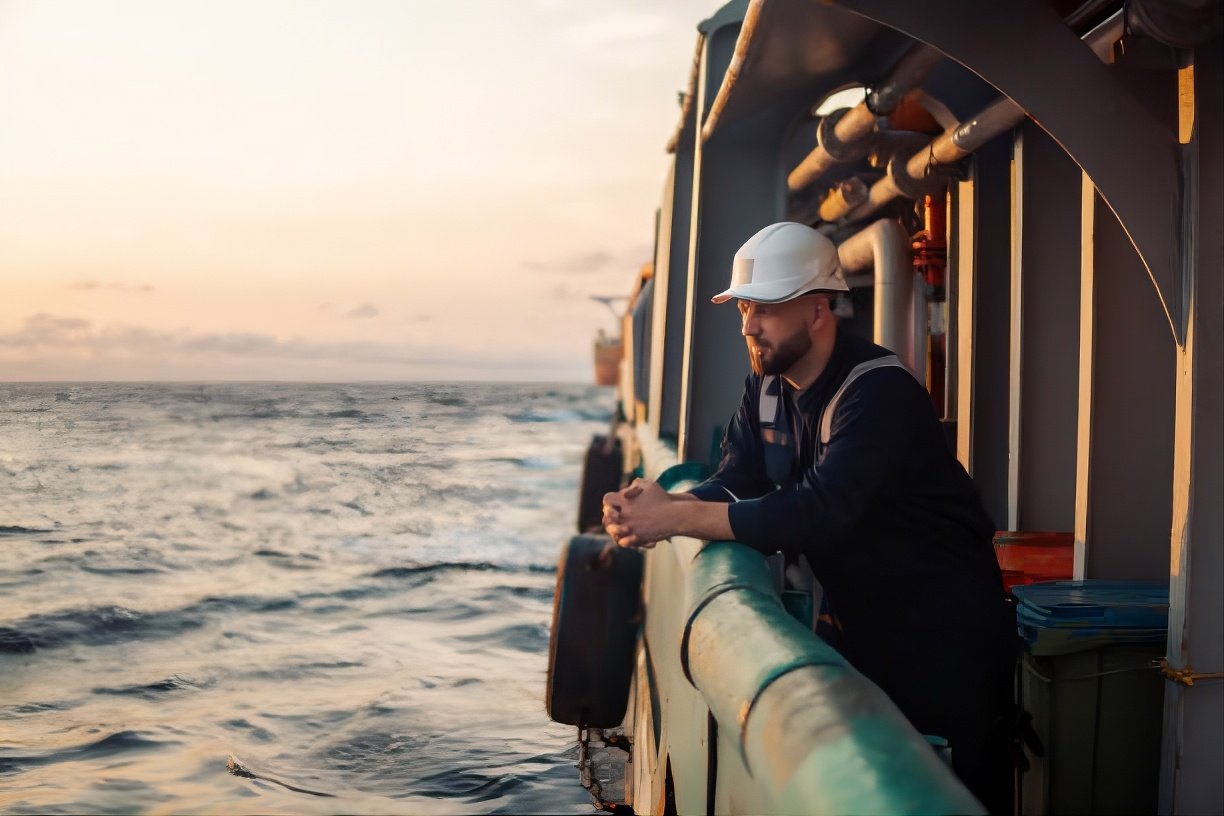
The global maritime industry operates under clear international standards, chief among which is the Maritime Labour Convention, 2006 (MLC 2006). Often referred to as the “Seafarers’ Bill of Rights,” it guarantees basic social, economic, and labor rights for crews regardless of the flag the vessel flies.
Transparent Employment Agreements and Regular Wage Payments Every seafarer has the right to a clear, written contract (Seafarer’s Employment Agreement) signed voluntarily after a thorough review of its terms. According to the provisions of MLC 2006:
- Wages must be paid regularly, at least once a month, in accordance with the employment agreement or collective bargaining agreement.
- Seafarers must receive a monthly wage slip detailing earnings, additional allowances, and the exchange rate used if paid in a different currency.
- Shipowners are required to provide convenient and reasonably priced mechanisms to regularly transfer all or part of a seafarer’s earnings to their families ashore.
Right to Repatriation and Protection in Critical Situations The issue of returning home is one of the convention’s fundamental guarantees. A seafarer is entitled to free repatriation at the shipowner’s expense in the following cases:
- Expiration of the employment contract while abroad.
- Termination of the contract by the shipowner, or by the seafarer for justified reasons.
- Inability to carry out duties due to illness, injury, shipwreck, or the sinking of the vessel. To ensure this, every ship must carry financial security documentation guaranteeing coverage for repatriation costs and crew maintenance, even in the event of the shipowner’s insolvency.
Strict Control of Work and Rest Hours Burnout and fatigue pose a direct threat to maritime safety, which is why the convention strictly regulates working hours. Standards establish the following limits:
- Maximum working hours shall not exceed 14 hours in any 24-hour period, and 72 hours in any seven-day period;
- Or, minimum hours of rest must be at least 10 hours in any 24-hour period (which may be divided into no more than two periods, one of which must be at least 6 hours long) and 77 hours in a seven-day period.
The Stella Maris Ukraine team reminds you: awareness of the MLC 2006 convention is your primary shield in protecting your rights. If you face labor violations, delayed payments, or other crisis situations during a voyage, you can always count on the informational and humanitarian support of our mission.
The charitable organization “Apostleship of the Sea” Stella Maris Ukraine is part of an international Catholic network providing support to people of the sea-seafarers, port workers, cadets, fishers, and their families. Our mission is to offer comprehensive assistance to these groups through a variety of programs and initiatives.


 We send our newsletter only once a month.