




Preparing for your first voyage starts long before you climb the gangway. A cadet whom a crewing company calls to a ship “in a week” often discovers that the medical certificate is already invalid and one of the certificates expired during their practice placement. A week is not enough for this, so start two to three months ahead.
A seafarer’s first contract: where it starts
Working at sea as a beginner usually starts with a cadet placement or a position as a deckhand or motorman. Crewing for cadets is a separate track at many companies: they take students for practice and then offer a first full contract.
Read the contract in full before you sign. Look at the term, the salary, who pays for travel to the ship and back, the vessel type and the flag. If anything is unclear, ask the manager in writing so that you keep the answer.
Medical for seafarers: what is checked
Without a medical certificate you will not be allowed on board. The commission checks eyesight, hearing, heart, blood pressure, blood and urine tests, carries out a chest X-ray and a psychiatric examination. A certificate under the STCW convention is valid for up to two years, and for those under 18 — one year.
Have your medical only at an institution authorised to issue such certificates. The crewing company will usually tell you which clinics it works with.
Nervous before your first contract?
Stella Maris psychologists work with cadets and beginner seafarers: they help with anxiety before a voyage and uncertainty about the profession. The first three sessions are free.
Seafarer documents in 2026
The minimum package for a first voyage:
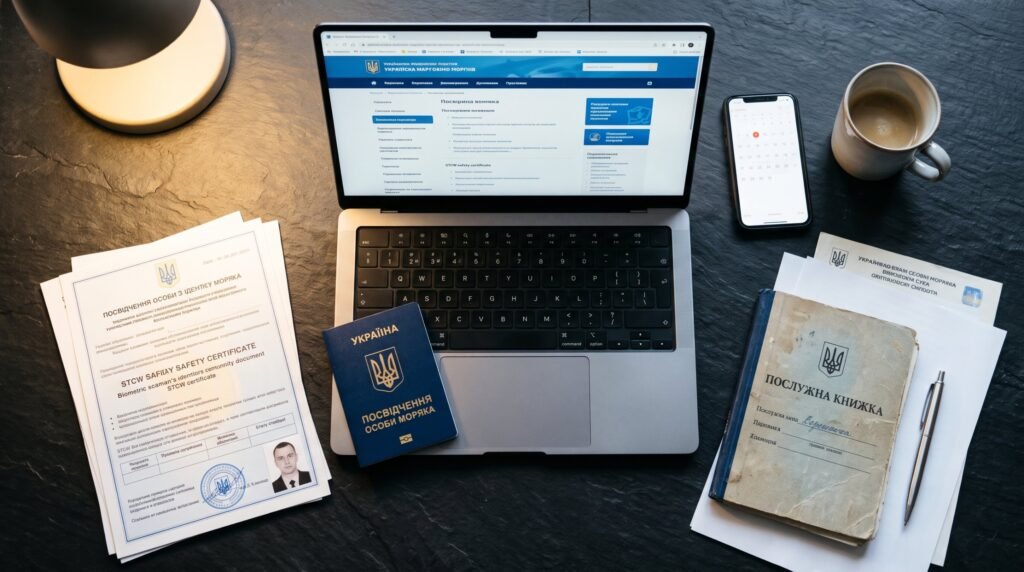
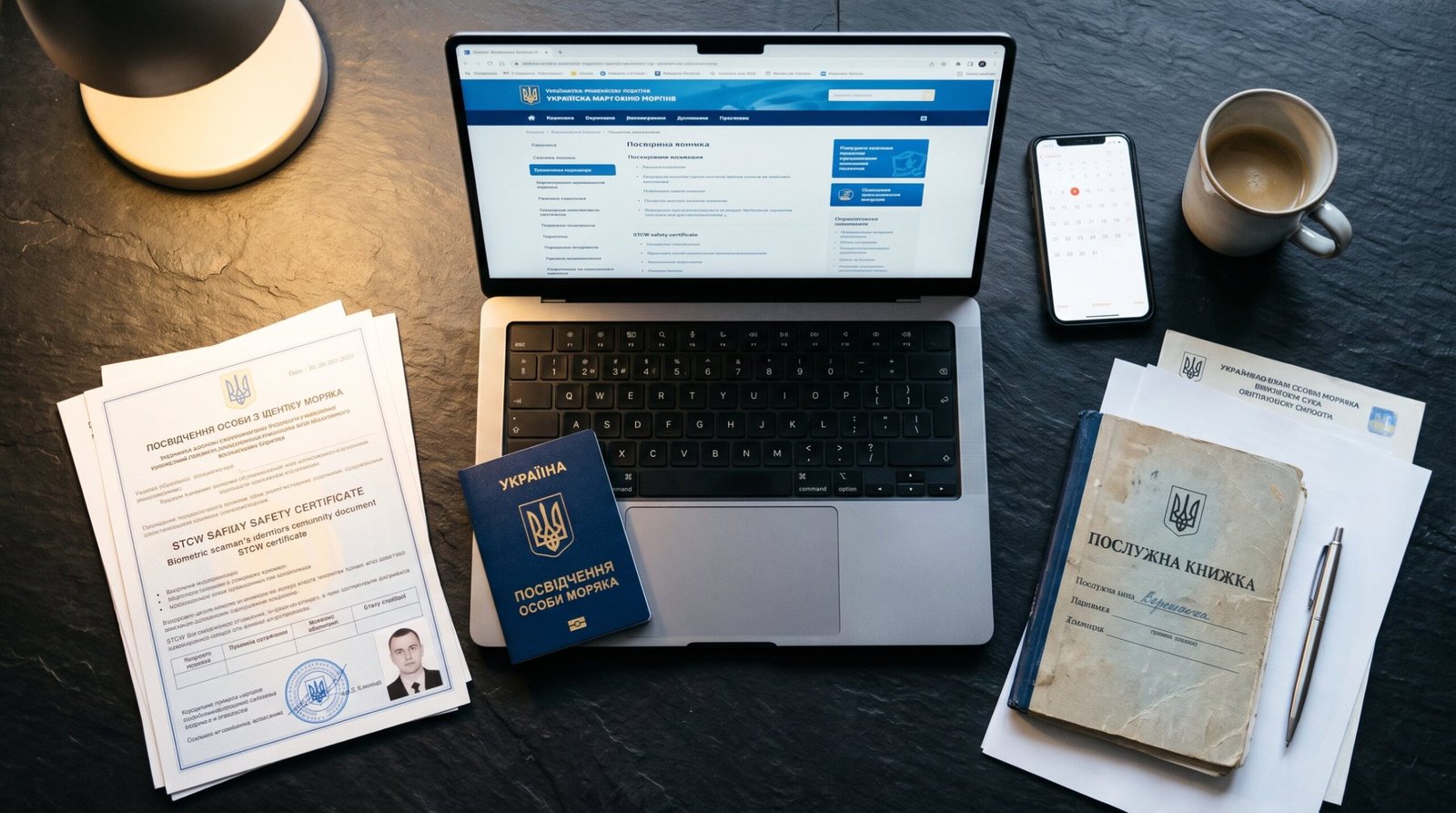
- a foreign passport and a seafarer’s identity document;
- a diploma or a rating certificate for your position;
- basic safety certificates under STCW;
- a medical certificate;
- a service record book;
- a visa, if the country of joining requires one.
Check the expiry dates of every document: they must cover the whole contract with a margin. Some seafarer documents in 2026 can be processed remotely, through an authorised person. We have covered which documents to renew and where to do it in a separate article.
During martial law, men of conscription age should separately check the current border-crossing rules for seafarers with their crewing company.
What a seafarer should bring on a voyage: packing list for a ship
Work clothes and protective equipment are usually issued by the company, but confirm this in advance. Choose clothes for the voyage to suit the route: the tropics and the North Sea call for different things.
A short seafarer checklist:
- copies of all documents on paper and in the cloud;
- a supply of medication for the whole contract if you take it regularly, and prescriptions in English;
- comfortable shoes for free time;
- a socket adapter and a power bank;
- headphones, books and films downloaded for offline use;
- some cash in US dollars.
Don’t take too much: the cabin is small, and you will have to pay extra for overweight luggage at the airport.
Where the limit is: what no checklist will cover
A packing list will help you not to forget anything, but it won’t prepare you for isolation, watches and separation from your family. The first voyage is usually hardest in the second or third month, when the novelty fades. Agree on contact with your family in advance and remember that asking for help is normal.
Preparing for your first voyage means documents, health and realistic expectations of life on a ship. Start with the medical and certificate expiry dates, and pack your kit last.
Entering the profession and have doubts?
Stella Maris psychologists help cadets and students of maritime universities with career planning and adjustment.
Read also: Seafarer Documents: Which Certificates and Diplomas You Need to Renew — when and where to renew your documents after your first contract.




 We send our newsletter only once a month.
