



After a six-month contract, many seafarers notice a few extra kilograms. The cause isn’t laziness. On a ship there is a cook who prepares generous meals, four-hour watches and little room to move. A seafarer’s health at sea depends on a few habits that you can build from the very first week.
Food on a ship: what you can control
You don’t choose the menu, but you do choose your portions. A seafarer’s diet is often skewed towards meat, potatoes, pasta and baked goods, and after a few weeks at sea there are fewer fresh vegetables.
What really helps:
- fill half your plate with vegetables when they are available, and with soup when they aren’t;
- don’t eat every time you walk past the galley;
- drink water instead of sweet drinks and boxed juices;
- talk to the cook: they are often willing to make a simpler dish if you ask in advance.
How not to gain weight at sea
Weight doesn’t go up from one hearty lunch but from snacking between watches. The night watch is especially risky: the body wants energy, and your hand reaches for biscuits. Take nuts or dried fruit with you and keep them in your cabin instead of sweets.
Your daily routine at sea also affects your weight. If you don’t get enough sleep, your appetite grows. So sleep matters as much as what’s on your plate.
Feel like fatigue is piling up?
Overeating and insomnia are often a reaction to stress. Stella Maris psychologists work with seafarers online, including during a contract.
Exercise on a ship without a gym
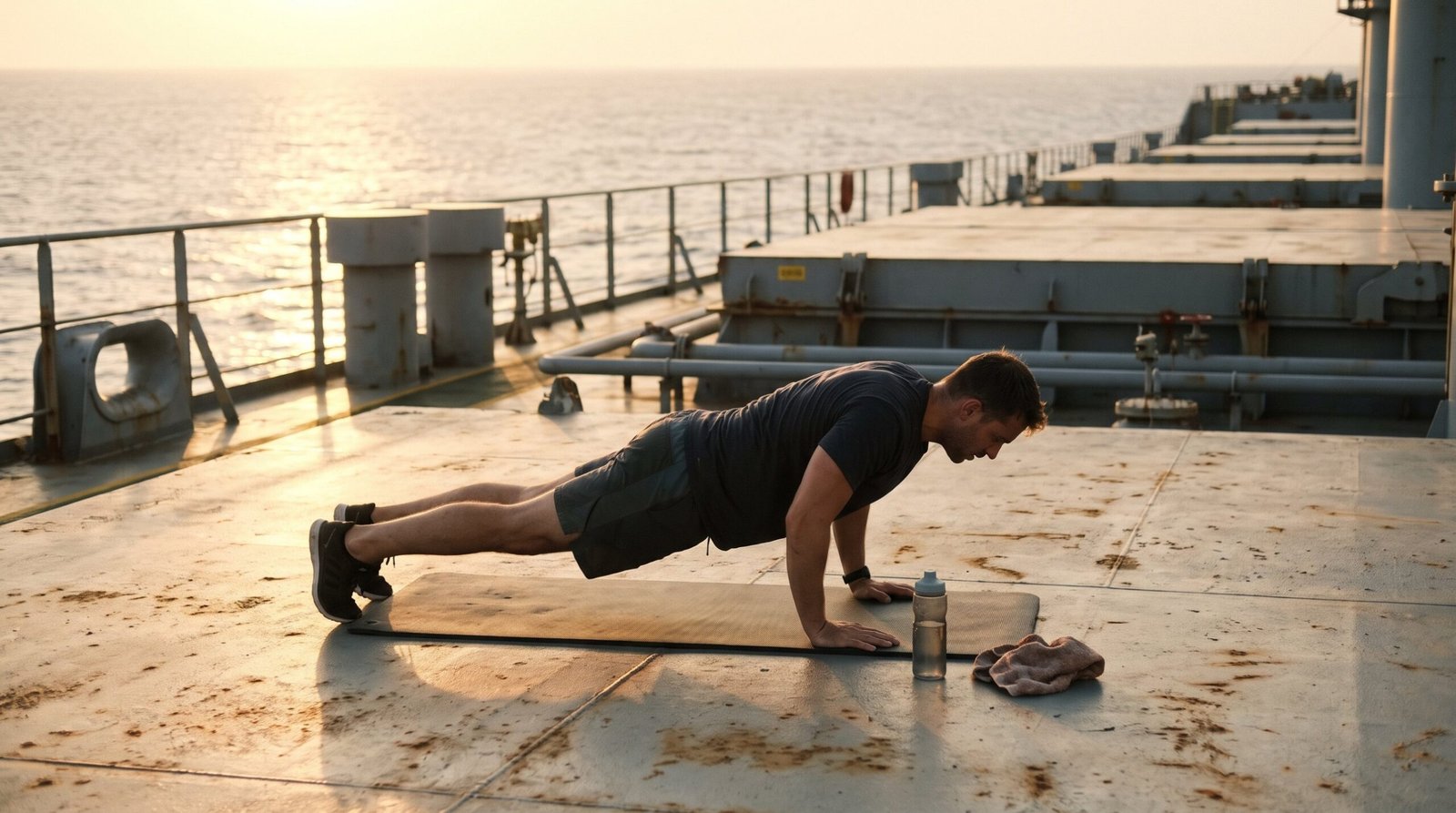
Large ships often have a small gym. On smaller ones you will have to make do with your own body weight. Fitness for seafarers means push-ups, squats, planks, lunges and a skipping rope if space allows.
The WHO recommends that adults get at least 150 minutes of moderate activity a week. At sea that is 20–25 minutes a day. It’s better to exercise every day, even briefly: physical activity on a ship works when it is regular.
Be careful in a storm and on a wet deck. Exercise where nothing can fall and you won’t hit anything.
Vitamins for seafarers: when they are really needed
If you go for weeks without seeing the sun or fresh vegetables, vitamins for seafarers can make sense. Vitamin D is the one most often lacking, especially in northern latitudes. But vitamins are no substitute for proper food, and an excess is harmful.
Before the voyage, have basic tests done and discuss with your doctor what exactly you should take. Bring a supply for the whole contract: the products you need may not be available in port.
Where the limit is: what fitness can’t replace
Staying healthy on a ship is not only about the body. Training and proper nutrition won’t fix chronic overtiredness, burnout or anxiety about your family. If you notice that you constantly don’t feel like doing anything, a pull-up bar won’t help: this is something to talk about, not to endure.
A seafarer’s health at sea rests on habits: smaller portions, daily movement, water and sleep. Start with one item in the first week of your contract and add the next once you’re used to it.
Is the contract wearing you down more than usual?
Stella Maris psychologists help seafarers cope with burnout after a long voyage. The first three sessions are free.
Read also: Sleep on a Ship: How to Beat Insomnia and Get Your Body Clock in Order — how watches affect sleep and what to do about it.





 We send our newsletter only once a month.
