



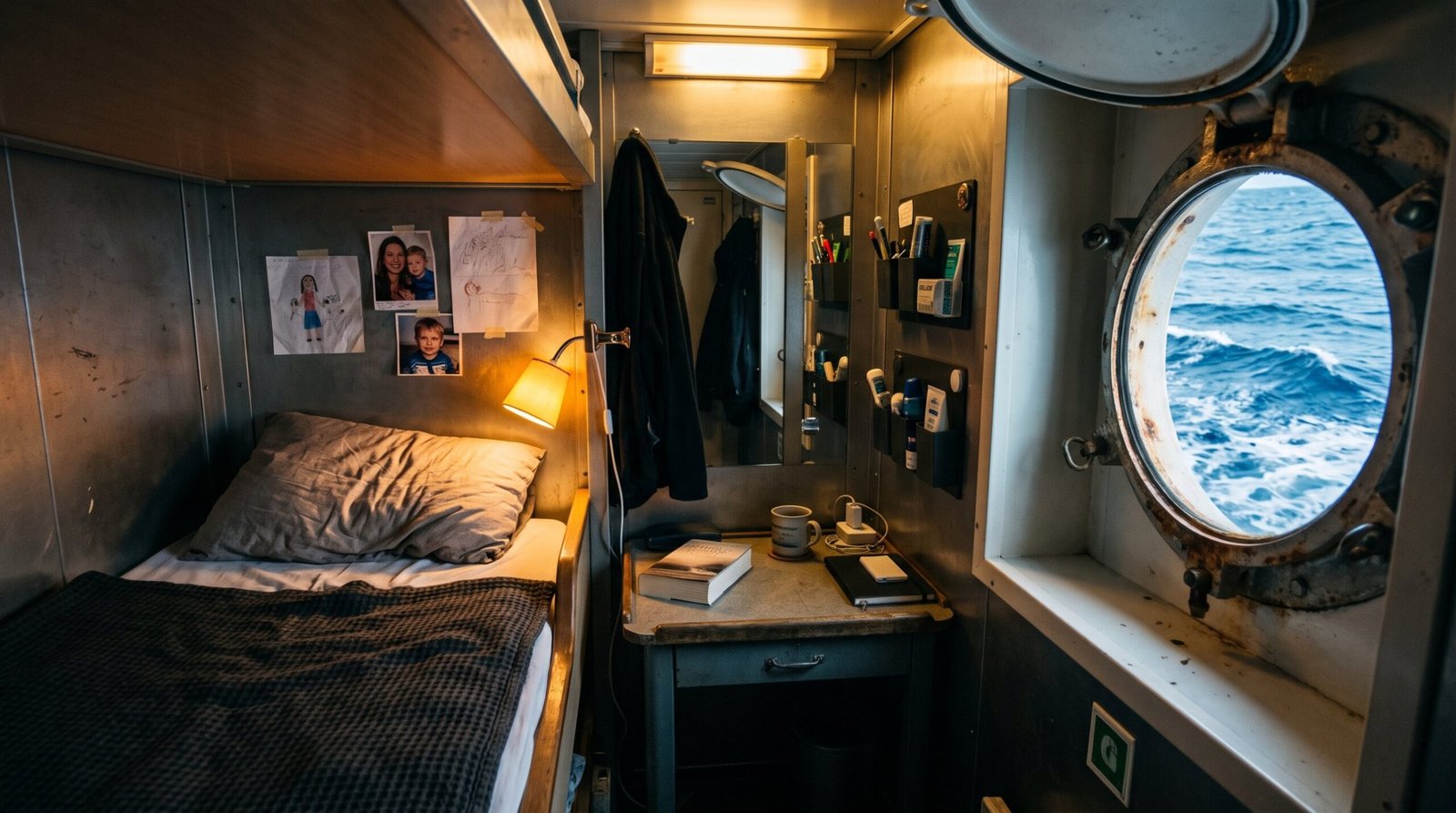
A few square metres, a bed, a desk, a wardrobe and a porthole, if you’re lucky. For half a year this is your home. A seafarer’s cabin is rarely cosy from day one, but a few things and habits can make it a place where you really rest.
Ship cabin ergonomics: what you have to work with
The furniture in a cabin is fixed, and the space is designed for the minimum. You can’t change the layout, so work with what there is: free surfaces, walls and the space under the bed.
Before you arrange your cabin, check the company’s rules. On many ships drilling, sticking things to the walls and using heating appliances are forbidden. Breaking fire-safety rules will cost more than any amount of cosiness.
What to bring to the cabin: things for comfort at sea
Small things that remind you of home on shore do the most for the feeling of home. What you can bring to the cabin:
- your own pillowcase or blanket;
- a few photos of your loved ones;
- organisers for small items that attach with Velcro or magnets;
- a small rug by the bed;
- your favourite tea or coffee, if the galley allows;
- books and films for offline use.
Check every item with a simple question: will it fly onto the floor in a storm?
Feel lonely even in a cosy cabin?
Loneliness on a contract doesn’t always depend on conditions. Stella Maris psychologists work with seafarers online, and the first three sessions are free.
Light and sound: comfortable sleep on a ship
Lighting in a seafarer’s cabin is usually bright and cold. A small lamp with warm light, battery-powered or USB, will help you wind down before sleep. A sleep mask will come in handy if you sleep in the daytime after a night watch.
Cabin soundproofing on most ships is poor: you can hear the engine, footsteps and your neighbours’ doors. Earplugs or headphones with white noise help you fall asleep even next to the engine room. A cosy atmosphere in the cabin depends largely on good sleep.
Order and organisation of space in the cabin
In a small space, mess builds up within a day. A few simple rules are enough: every item has its place, dirty clothes don’t lie on the chair, and only what you need right now is on the desk. It’s easier that way in a storm too, when loose items start to move.
Once a week, air the cabin and change the bedding. These are small things, but they are what separate a home from a place where you merely sleep.
Where the limit is: a cabin can’t replace shore
Even the cosiest cabin won’t remove the fatigue of a confined space and monotonous days. If you increasingly don’t feel like leaving your cabin and talking to the crew, it’s a signal to pay attention to how you are, not to buy another lamp.
A seafarer’s cabin can be cosy even if nothing in it can be changed. Bring a few things from home, set up light and sound for sleep and keep things tidy.
Is the contract wearing you out?
Stella Maris psychologists help seafarers cope with stress and burnout during a long voyage.
Read also: Sleep on a Ship: How to Beat Insomnia and Get Your Body Clock in Order — what else helps you sleep between watches.









 We send our newsletter only once a month.
