


Some islands exist on maps. Others exist in the consciousness of an entire nation. Snake Island — Zmiinyi — belongs to the second kind. A small, rocky patch of land covering less than 0.2 square kilometres, lost in the Black Sea 35 kilometres from the shore, and yet a place that has entered history more than once: first in antiquity, then in recent times. Each time, as a point where something important was decided.
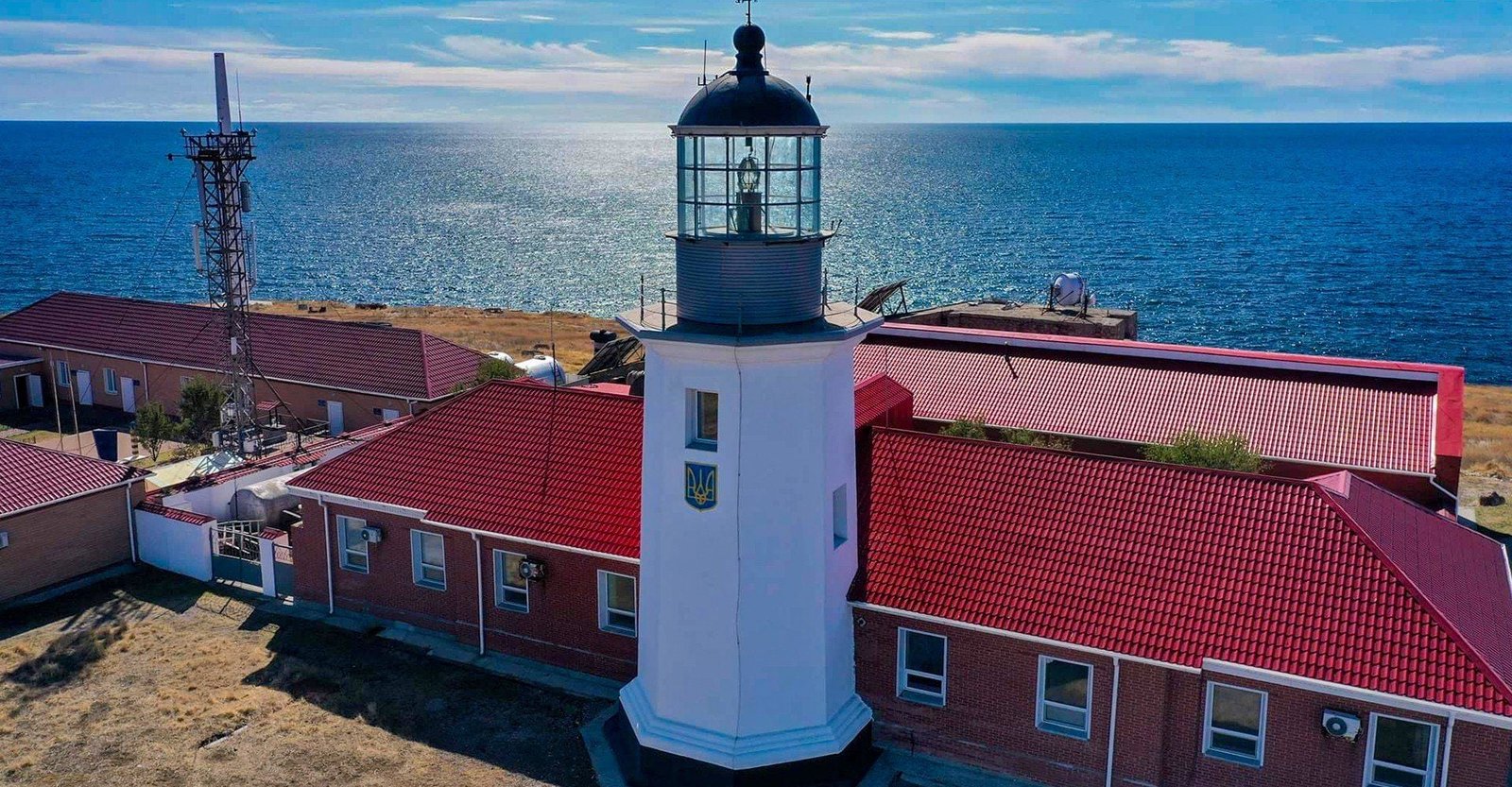
On this island stands a lighthouse. And beside it — an annex where a person once lived whose entire purpose was to keep the light burning.
An Island Three Thousand Years Old
The ancient Greeks called this island Leuce — “the White One.” According to their legends, it was here that the soul of Achilles came to rest after death. The hero of the Trojan War, immortal in memory, left his echo on this island to this day. Ancient seafarers would leave offerings here: coins, figurines, weapons. They believed Achilles watched over those who sailed past.
This is not merely legend. Archaeologists have found traces of an ancient Greek temple dedicated to Achilles on Zmiinyi, coins from across the ancient Mediterranean, remains of ritual structures. The island was a place of pilgrimage — a maritime sanctuary in the middle of open water.
Later, the island changed names and rulers. Romans, Byzantines, Genoese, Ottomans, the Russian Empire — everyone who held power over the Black Sea understood: this small piece of rock controls the sea route between the Danube and Crimea. The strategic value of Snake Island has not changed in three thousand years. Only the instruments of power over it have.
The Lighthouse: Who Built It and Why
The lighthouse on Snake Island appeared in the nineteenth century, as part of a system of navigational structures the Russian Empire was building along the Black Sea coast. The logic was straightforward: the island sits directly on the trade routes between Odesa, Constanța and the Bosphorus. Hundreds of vessels a year passed by it in darkness or fog — and each of them was at risk.
The lighthouse solved that. It is not large or impressive in scale — but its location makes it one of the most important navigational landmarks in this part of the Black Sea. The beam is visible for dozens of kilometres into open water. For a captain sailing through the night, that light is the only fixed point between sky and sea.
Technically, the lighthouse is a cylindrical tower with a lantern room at the top — a design typical of the nineteenth and early twentieth century: a massive base tapering upward, a Fresnel lens optical system that transforms a single flame or lamp into a powerful, directed signal. Structures like this were built to stand for centuries — and they do.
The Annex: Where the Person with the Light Lived
Beside the tower stands a small residential and service building. This is the “annex” — rarely written about separately, yet no less important for understanding what a lighthouse is as a human institution.
The lighthouse keeper lived here permanently. Sometimes with a family. On an island of less than twenty hectares, with no fresh water, no soil for a garden, bare rock in the middle of the sea.
His work was to ensure the light never went out. Every day — refilling the fuel reservoirs, cleaning the lenses of salt and soot, keeping a log of weather and passing vessels, checking the rotation mechanism. In a storm — going outside to make sure everything was holding. The fog horn — activated by hand, sometimes for hours at a stretch.
The lighthouse keeper is one of the oldest maritime professions, almost never mentioned alongside captains and navigators. But without him, every captain would sail into darkness blind.
The annex on Snake Island is not simply a service building. It is evidence that someone lived here not because they sought solitude, but because their presence saved other people’s lives. Responsibility as a way of being.
Snake Island in Recent History
In February 2022, Snake Island entered the consciousness of millions of people around the world. A small garrison of Ukrainian border guards, a demand to surrender — and a response that became a symbol. The island that had stood between people and the sea for three thousand years once again found itself at the centre of an event where something larger than military tactics was being decided.
For seafarers — for everyone whose work is tied to the Black Sea — Zmiinyi had always been part of navigational reality. A lighthouse on the horizon. A point on the chart. After February 2022, it became a point on the map of identity as well.
Ukraine is a maritime nation not simply because it has access to the sea. But because the sea is woven into the way people here remember, resist and hold together.
Why Lighthouses Are About People, Not Structures
The lighthouse on Snake Island is a concrete architectural structure with a concrete navigational function. But every lighthouse is also a metaphor for a certain kind of presence in the world: to stand where it is difficult, and to give bearing to those who need it.
Seafarers understand this metaphor literally. For a seafarer navigating a vessel through the night, a lighthouse is not poetry — it is a fact of survival. And at the same time, a sign that someone took care of you before you ever left port. Someone filled the reservoir, cleaned the lenses and remained on that rock so you would not be lost.
This same logic — being present with seafarers before they need help — is at the heart of maritime ministry.
Stella Maris Ukraine: Alongside Seafarers
Stella Maris Ukraine is an international Catholic organisation of maritime apostolate that has worked for 20 years alongside those who go to sea: seafarers, fishers, port workers and maritime cadets. And with their families — those who remain on shore and wait.
Working with seafarers is not a one-off action. It is a sustained presence. Psychological support — individual and group sessions, online consultations, self-help materials — for those living through long separation, the stress of a voyage, or a difficult return home. Education programmes in financial literacy — because a family’s stability depends not only on how much a seafarer earns, but on how that family manages life in the rhythm of his or her absence and return.
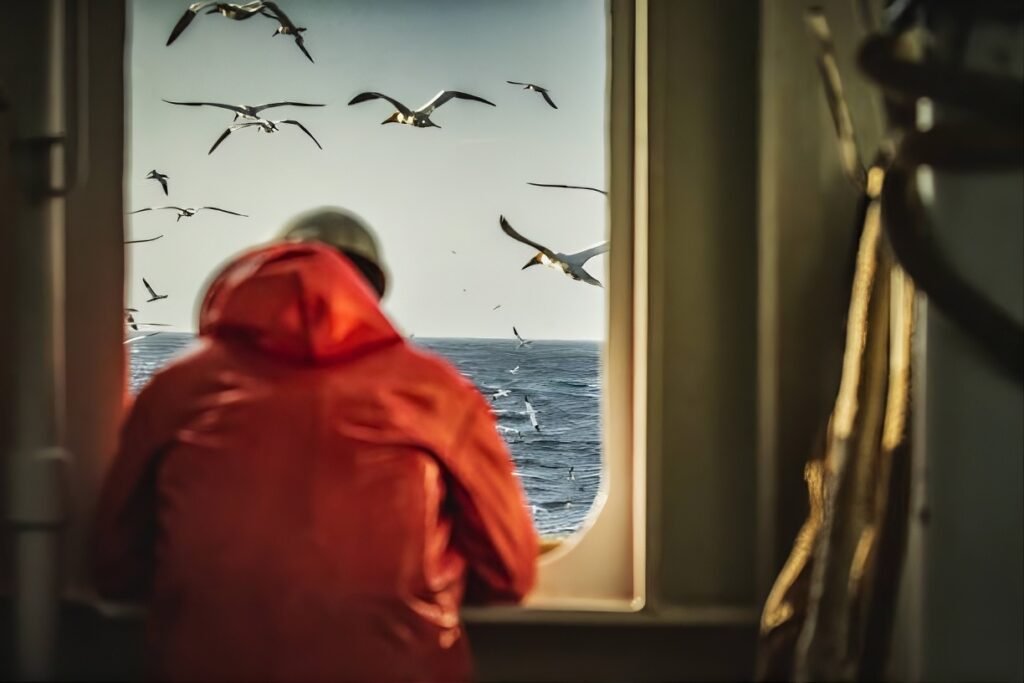
And alongside all of this — chaplains. People who simply show up. They visit vessels, talk with crews, listen. For someone who has been at sea for months, the chance to speak with someone present and outside the ship’s hierarchy is not a small thing. It is often the only bridge between a person and the shore.
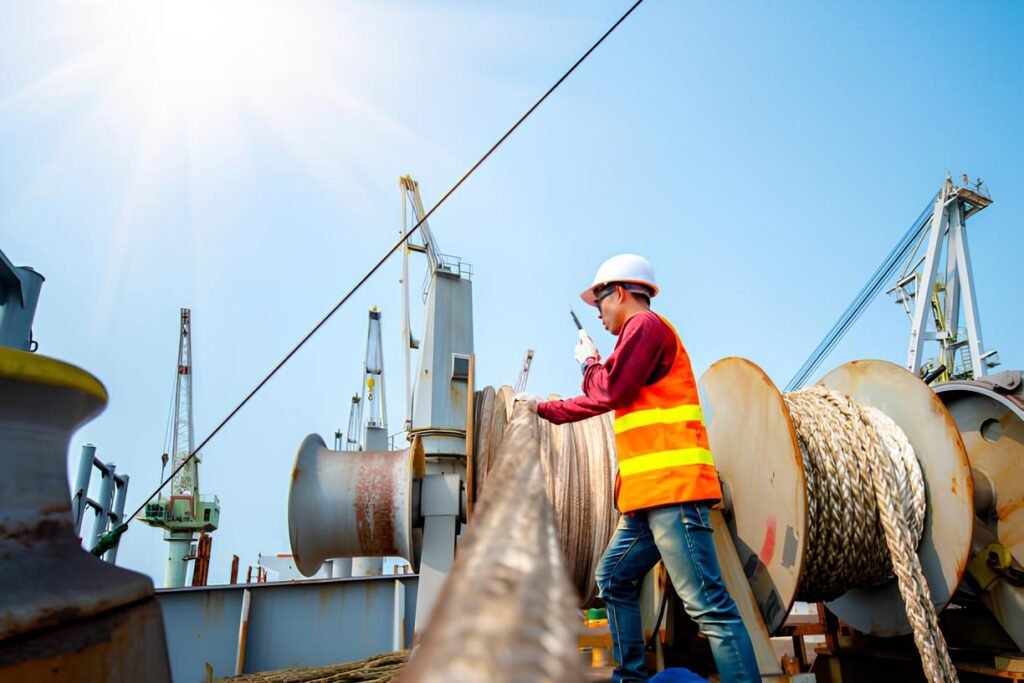
Seafarers carry trade routes, fisheries, port logistics — an invisible infrastructure without which a country cannot function. Yet they are often out of sight. Stella Maris Ukraine is one of the few organisations that sees them.
A Lighthouse Lives as Long as Someone Tends the Light
The lighthouse on Snake Island stands on rock in the open sea. But the seafarers for whom it burns are not alone. Or at least they should not be.
Stella Maris Ukraine produces small wooden lighthouse figurines — a symbol of presence, attention and connection to maritime Ukraine. They can be received as a gesture of thanks for a charitable contribution to the organisation, or simply acquired as a reminder of those who go each day to where the land ends.
Each figurine is participation in something larger than a keepsake. It is a way of saying: seafarers matter. Their work, their families, their resilience — matter.
 We send our newsletter only once a month.