



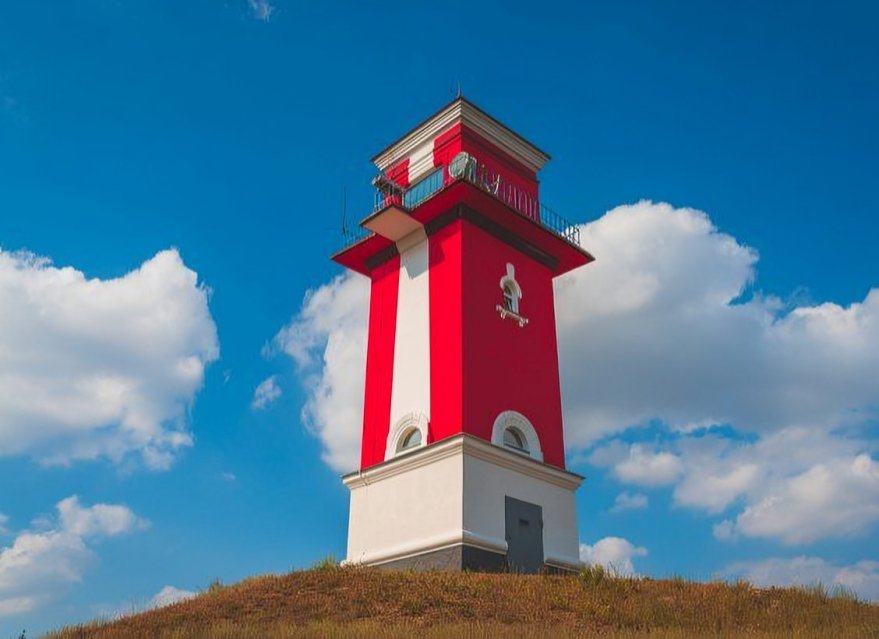
Not every lighthouse stands on a cliff above the open sea. Not every one is visible from dozens of kilometres away, and not every one has passed into legend. Some lighthouses are quiet and practical. They do not impress with their silhouette and do not appear on postcards. But without them, vessels do not reach where they need to go. The Kysliakivskyi Rear Lighthouse is exactly that kind of structure — invisible to most, indispensable to those navigating the fairway.
Where It Stands and Why a Lighthouse Is Needed Here
The Kysliakivskyi lighthouse is located in the lower reaches of the Dnipro river — the zone where the great river branches into channels and gradually opens into the estuary before reaching the Black Sea. This is Kherson Oblast, one of the key regions of maritime Ukraine: trade routes pass through here, port terminals operate here, and river and sea cease to be separate concepts.
Navigation in the Dnipro delta is not the same as open-sea sailing. The hazards are different: sandbars that shift shape every season, narrow fairways between sandy spits, strong currents during floods, visibility that drops sharply in the mist that hangs over the water. For a large vessel, an error of a few dozen metres can mean running aground. For a tugboat with a barge in tow — the loss of cargo, or worse.
This is precisely why a system of navigational marks is needed here. And precisely why among them stands a lighthouse called the Rear.
What a Rear Lighthouse Is — and Why It Matters
“Rear lighthouse” is not simply a geographical name. It is a technical term describing the function of a structure within a range light system.
A range — or transit — is one of the oldest and most reliable methods of navigation in narrow waters. The principle is simple: two marks, a front and a rear, are placed in line along the safe fairway. When a vessel’s navigator sees both marks aligned — one directly behind the other — they know the vessel is on the correct course. Drift left or right and the marks separate in the field of view, signalling an immediate need to correct heading.
The rear lighthouse in this system is always the taller of the two, positioned further from the bank. It is the anchor point that draws the eye past the front mark and holds the vessel on the line. Without it, the entire range system fails.
This is an elegant technology that requires no electronics, no satellites, no complex equipment. Two lights on a single line — and the vessel is safe. Seafarers have used this principle for millennia, and it remains the standard on inland waterways and in port approaches around the world.
The Kysliakivskyi Rear Lighthouse serves exactly this function — to be the second voice in a dialogue of two lights that guide a vessel through a demanding stretch of water.
Architecture and Construction: Form Follows Function
Rear lighthouses on Ukraine’s inland waterways generally differ from their maritime counterparts. These are not the massive stone towers of the nineteenth century, built to withstand ocean storms. They are often metal or reinforced concrete structures — less monumental, but no less precise in their purpose.
A typical construction: an open lattice tower or mast on a concrete foundation, with a lantern at the top and a characteristic angled reflector panel that makes the mark visible by day. The height is sufficient to lift the light or reflector above the treeline and riverbank so it is visible from the fairway at the correct angle. At night — a rhythmic flashing signal with a clearly defined character that distinguishes this mark from all neighbouring ones.
Nothing superfluous. Maximum function with minimum form — this is the aesthetic of a working navigational mark.
The Dnipro Delta: Where a River Becomes the Sea
To understand the significance of the Kysliakivskyi lighthouse, it helps to picture the landscape where it stands.
The lower Dnipro is one of Ukraine’s most heavily used inland waterways. Dry cargo vessels carrying grain, fuel tankers, ferry crossings, fishing boats, tugboats and large barges all pass through here. Kherson as a port city was for decades a key junction between river navigation and the Black Sea route. Cargo leaving from here reached Odesa, Istanbul, the Mediterranean.
The estuary before the sea is a particular navigational zone. Depths are unstable, the underwater relief shifts after every flood or storm, wind from the open sea meets river current and creates unpredictable conditions. Here an experienced captain does not rely on instinct alone — they rely on the system: charts, echo sounder, and range marks.
A lighthouse in the middle of this landscape is not a romantic object. It is a working instrument of a living navigation system.
Lighthouses Nobody Notices — and People Nobody Notices
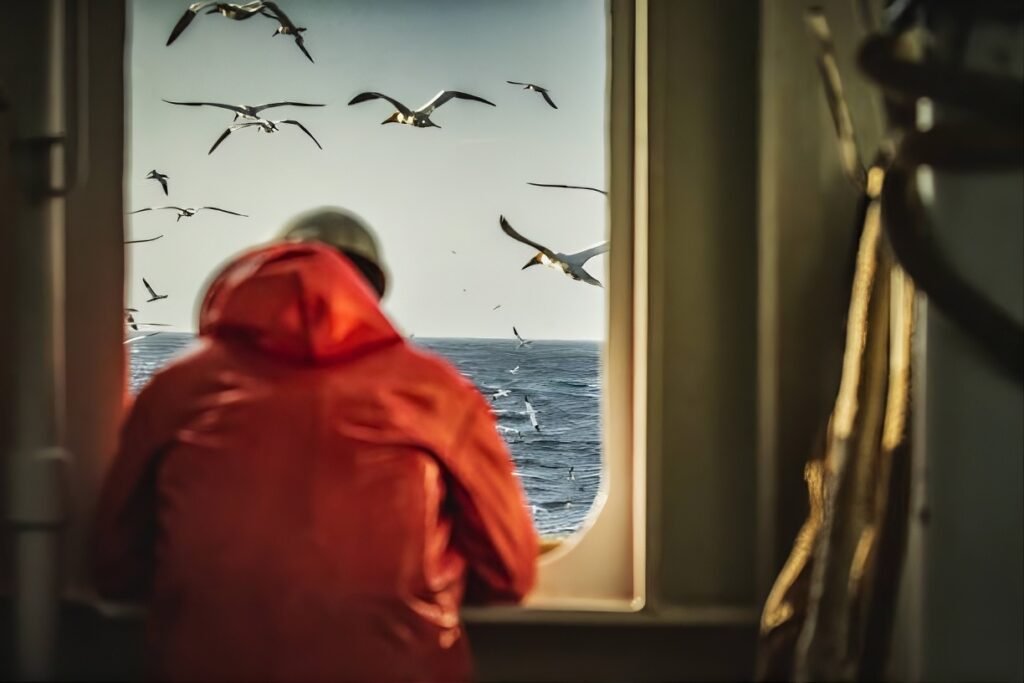
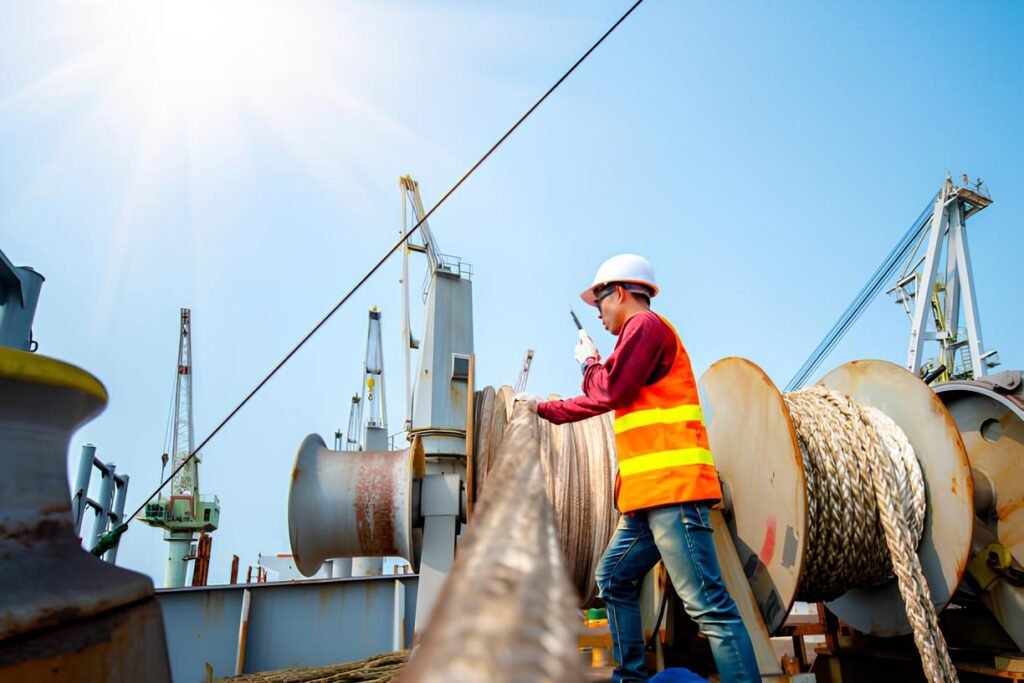
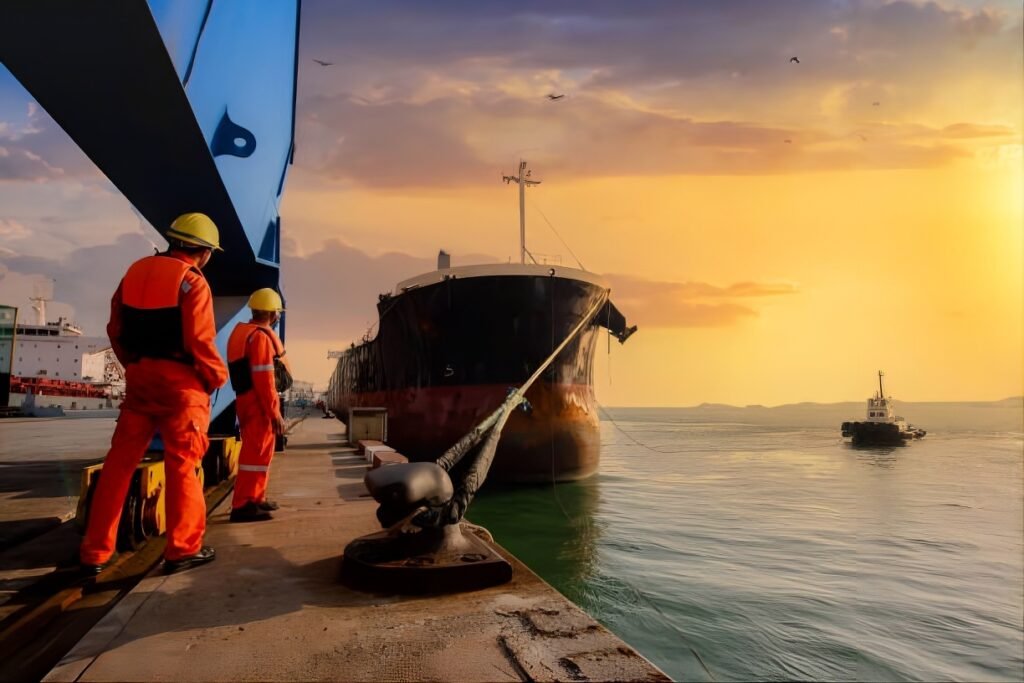
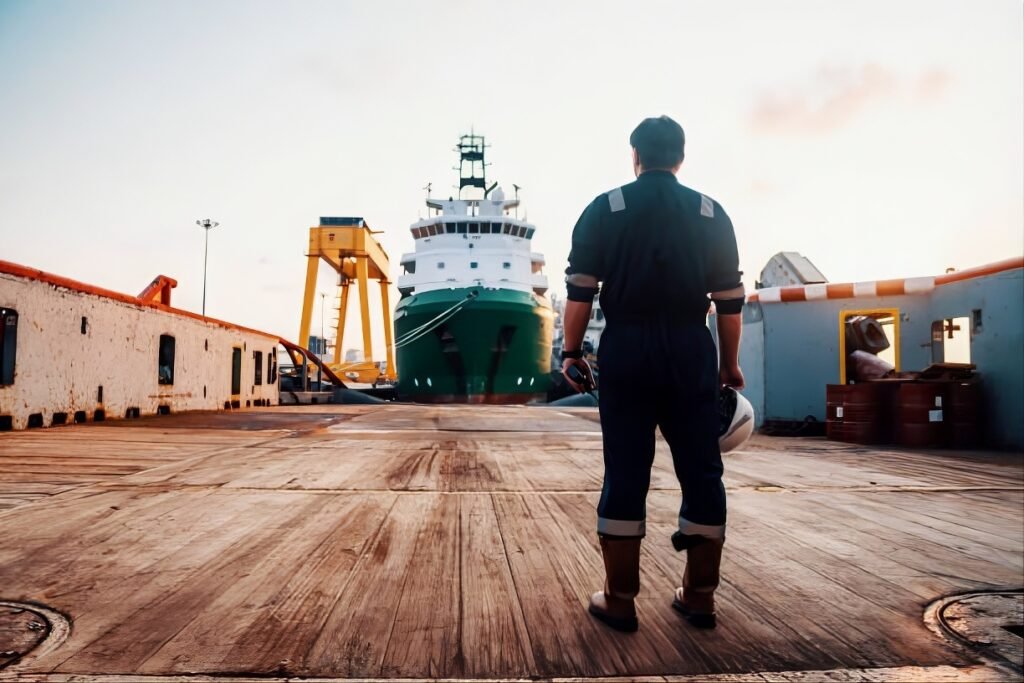
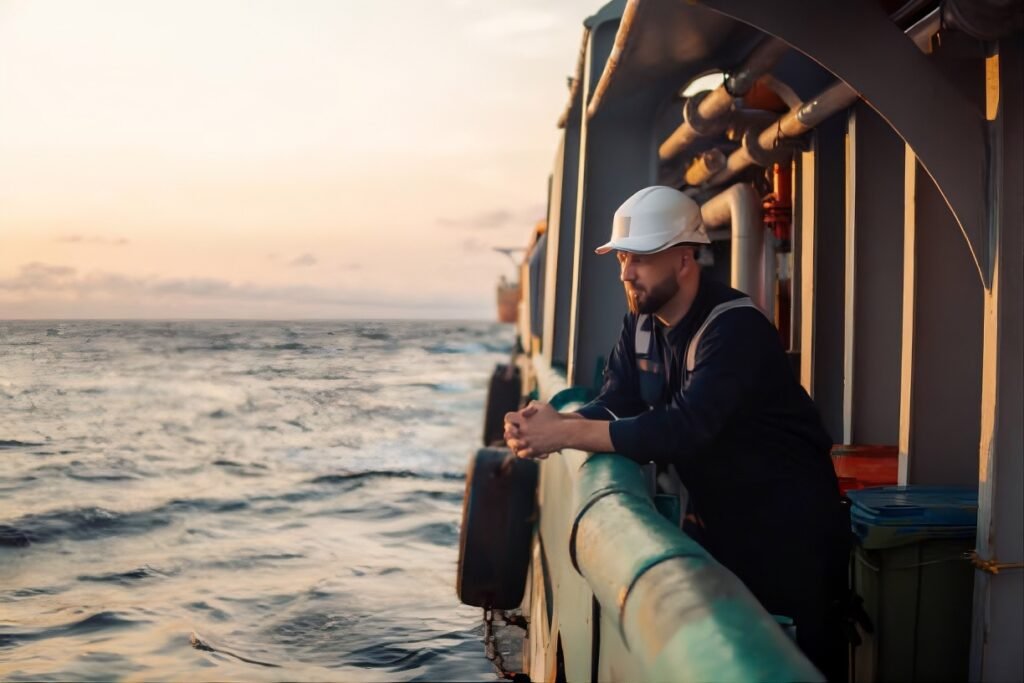
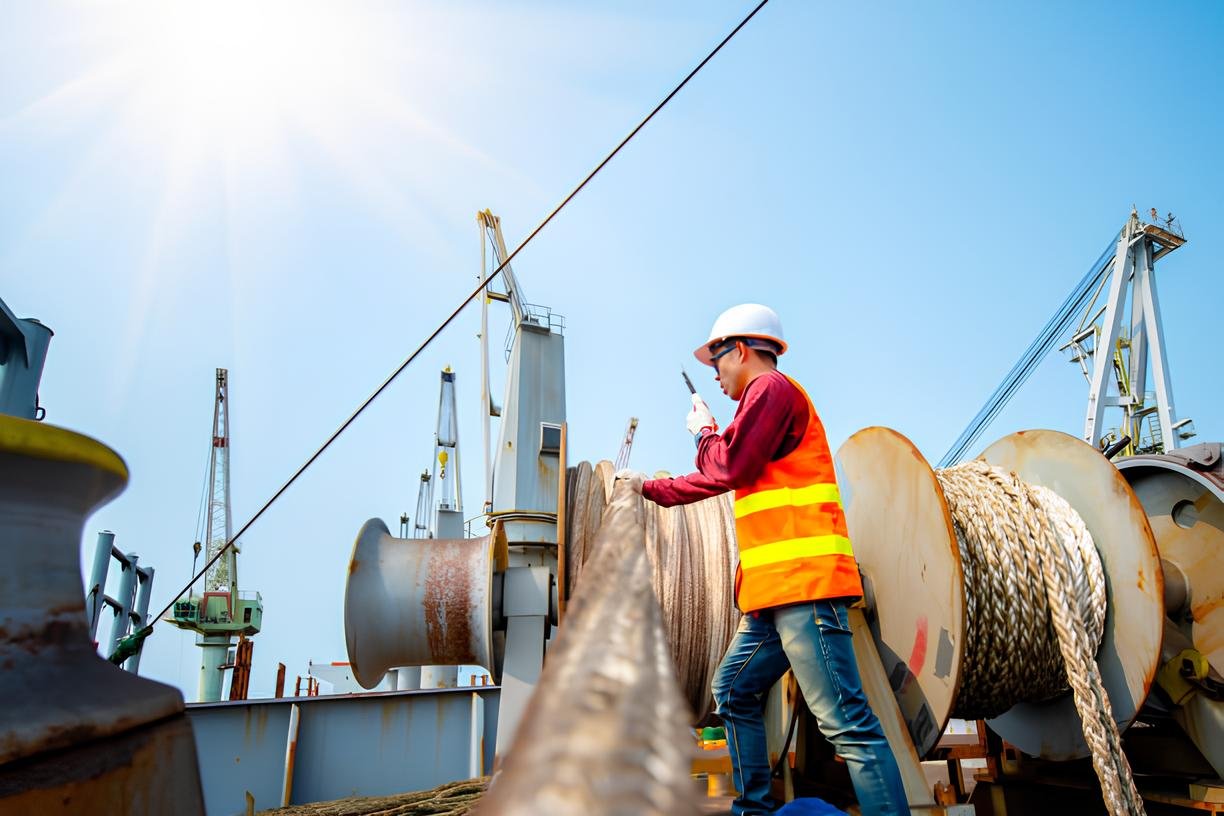
There is a parallel between the quiet lighthouses of inland waterways and the people who keep that system running. The technical staff of the lighthouse service, the captains of river vessels, the pilots of the estuary zone — these are seafarers in the fullest sense of the word. They do not sail into the open ocean, but without their work, maritime Ukraine does not function.
Fishers of Kherson Oblast who know this fairway from memory. Crews of tugboats guiding barges in any weather. Pilots who board every foreign vessel entering the estuary and take personal responsibility for its safe passage.
All of them are part of maritime Ukraine. An invisible but critically important part.
The Kysliakivskyi Rear Lighthouse stands for them. And they know exactly where it stands, because their work depends on it.
Stella Maris Ukraine: Alongside Seafarers
Stella Maris Ukraine is an international Catholic organisation of maritime apostolate that has worked for 20 years alongside those who go to sea: seafarers, fishers, port workers and maritime cadets. And with their families — those who remain on shore and wait.
Working with seafarers is not a one-off action. It is a sustained presence. Psychological support — individual and group sessions, online consultations, self-help materials — for those living through long separation, the stress of a voyage, or a difficult return home. Education programmes in financial literacy — because a family’s stability depends not only on how much a seafarer earns, but on how that family manages life in the rhythm of his or her absence and return.
And alongside all of this — chaplains. People who simply show up. They visit vessels, talk with crews, listen. For someone who has been at sea for months, the chance to speak with someone present and outside the ship’s hierarchy is not a small thing. It is often the only bridge between a person and the shore.
Seafarers carry trade routes, fisheries, port logistics — an invisible infrastructure without which a country cannot function. Yet they are often out of sight. Stella Maris Ukraine is one of the few organisations that sees them.
A Lighthouse Lives as Long as Someone Tends the Light
The Kysliakivskyi Rear Lighthouse stands where the river becomes the sea. Quietly, without ceremony — simply holding the line so vessels do not lose their course.
The seafarers for whom it burns deserve the same steady presence alongside them.
Stella Maris Ukraine produces small wooden lighthouse figurines — a symbol of presence, attention and connection to maritime Ukraine. They can be received as a gesture of thanks for a charitable contribution to the organisation, or simply acquired as a reminder of those who go each day to where the land ends.
Each figurine is participation in something larger than a keepsake. It is a way of saying: seafarers matter. Their work, their families, their resilience — matter.
 We send our newsletter only once a month.